INFINITY’s First Capacity Building Webinar

Register now

Decoding Digital Heritage: INFINITY Takes Center Stage at Europeana Project Month 2026

How do you turn millions of scattered historical documents, videos, and artifacts into an interconnected, ethical network of knowledge? The INFINITY project is heading to Europeana Project Month 2026 to showcase how cutting-edge AI and multidimensional knowledge graphs are transforming the common European Data Space for Cultural Heritage (DS4CH). During Europeana Project Month 2026, INFINITY researchers and technical leads will guide dedicated hands-on sessions. The focus? Demonstrating how semantic tools, explainable AI (XAI), and interoperable metadata can bridge local collection management systems (CMS) with European cloud infrastructures like the European Collaborative Cloud for Cultural Heritage (ECCCH) and the Data Space for Cultural Heritage (DS4CH). Date: 10-26 November 2026 (Tuesdays & Thursdays) Time: Morning sessions (09:30-12:00 CET) Afternoon sessions (14:00-16:00 CET) Location: Online 👉 Click here to register for Europeana Project Month 2026 During the sessions, attendees will discover how INFINITY moves beyond simple digitization to activate cultural heritage using transparent, verified AI tools: Multidimensional Knowledge Graphs (mKGs): Capturing complex spatial, social, temporal, and legal layers within interconnected digital items. Ethical AI & Data Provenance: Tracking human vs. machine workflows to guarantee copyright compliance, transparency, and data trust. Real-World Heritage Use Cases: [CROWD]: Citizen science and crowdsourcing campaigns for post-WWII archives [4DGRID]: Geo-temporal alignment creating 4D “digital time machines” of urban environments. [MANUSCRIPTS]: AI-assisted transcription and annotation of ancient texts. [AUDIOVISUAL] & [ARCHIVE]: Semantic enrichment and ethical IPR management for video, sound, and historical archives. View program details  By aligning data structures with FAIR (Findable, Accessible, Interoperable, Reusable) and CARE (Collective Benefit, Authority to Control, Responsibility, Ethics) principles, INFINITY ensures that European heritage remains a high-value resource for researchers, creative industries, and society. Integrated within the broader ECCCH initiative, our open-source tools empower cultural institutions—big and small—to digitize responsibly while supporting sustainable digital innovation. Join Us & Register Today! Ready to see how ethical AI is shaping the future of European digital heritage? Don’t miss our sessions during Europeana Project Month 2026! 👉 Click here to register for Europeana Project Month 2026
FIRST INFINITY LOCAL OPEN DAY: discover 4DGRID & the future of European Cultural Infrastructures!

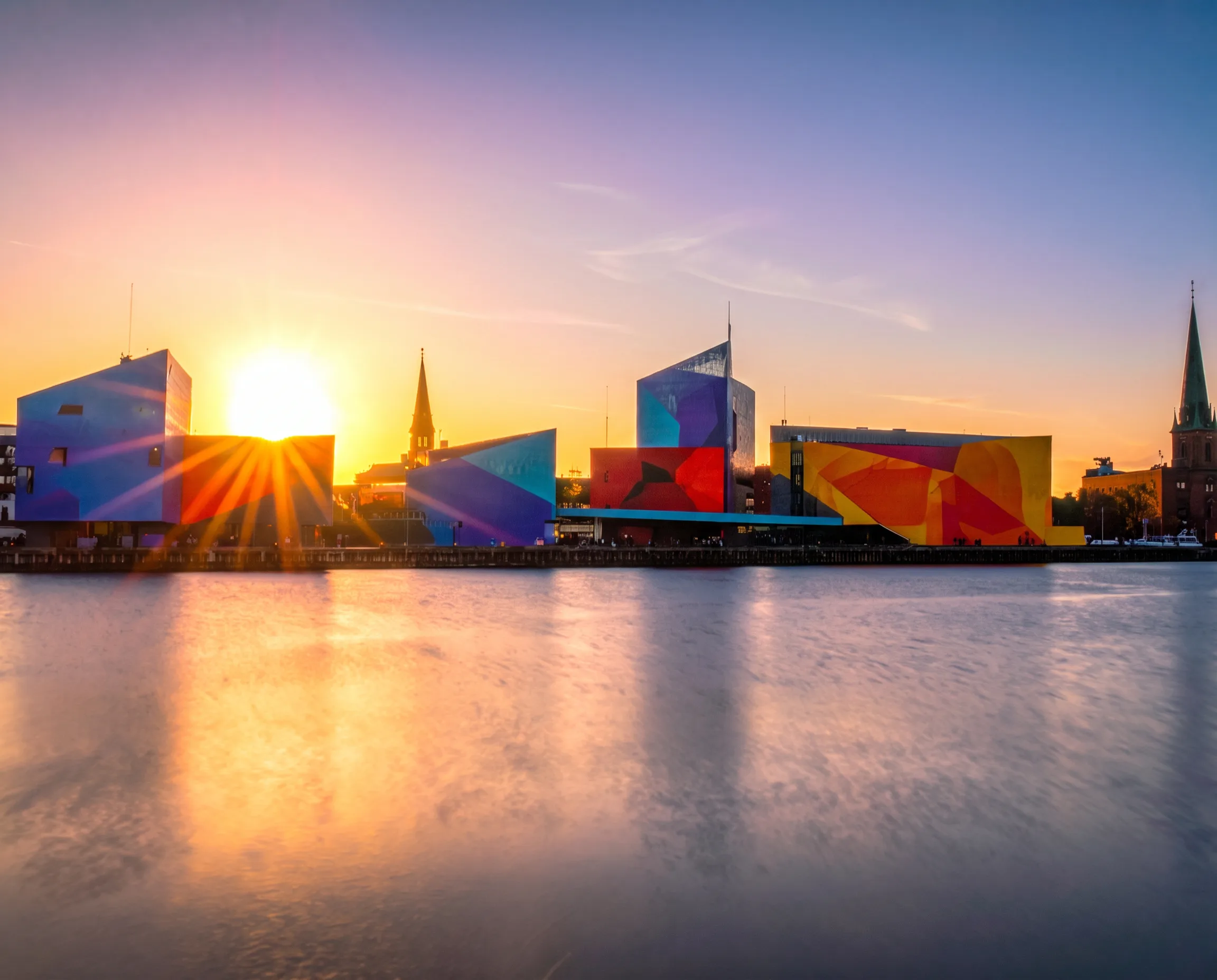
EVENT: Time Machine Connect by Time Machine Organisation, supported by the EIT Culture & Creativity North Regional Hub DATE: Wednesday , 30 September TIME: In person: full day (9.00–17:30 CEST) | Streaming: Time Atlas Hands-on Session 15:40–17:15 CEST LOCATION: Aarhus, Denmark (In-Person) & Remote via Zoom Agenda: 📍 Only in person, 15.10–15.40: Panel Session | European Opportunities: Building the Infrastructure for the Future. Sander Münster (Secretary, Time Machine Organisation) will present how INFINITY—alongside 3D-4CH and ECHOES—is building open-source software, ontologies, and capacity-building frameworks for the European Collaborative Cloud for Cultural Heritage ECHOES EU (ECCCH). 💻 Streaming, 15:40–17:15: 4DGRID Use Case Live Showcase & Hands-on Session How to participate: On-Site: last-minute seats available by contacting communication@timemachine.eu (note: lunch orders are no longer guaranteed). Remote streaming: join the Time Atlas interactive workshop live on Zoom! Step-by-step guidance will be provided to set up your workspace account and test the tools live (15:40–17:15). Please register your Time Atlas account in advance at timeatlas.eu. 🔗 Direct Zoom Stream: https://us06web.zoom.us/j/87262877768 Full event program: https://www.timemachine.eu/events/time-machine-connect-in-aarhus-dk/   Image Credit: Time Machine Organisation, created with Adobe Firefly.  

Beyond Monolithic Truths: INFINITY Drives Dual Semantic AI Workshops at ISWC 2026

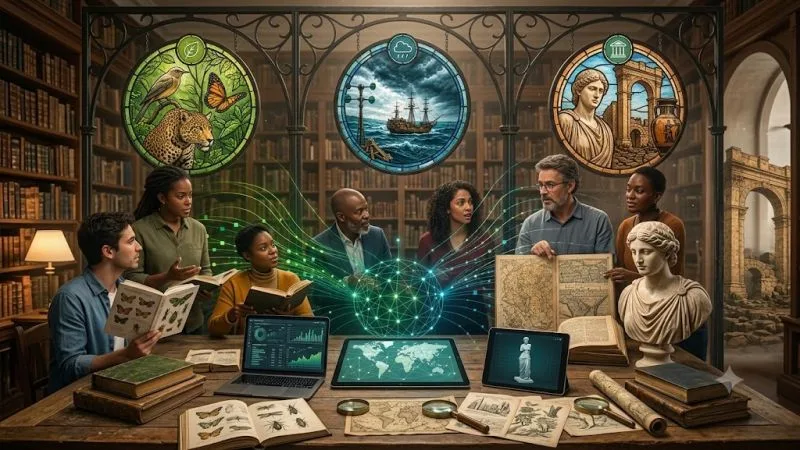
This image was created with the help of AI. History isn’t flat, so why should our data models pretend it is? At the 25th International Semantic Web Conference (ISWC 2026) in Bari, the INFINITY project is co-leading two complementary Barstuhl-format workshops—MKG and CHARGED—to pioneer ethical, multi-perspective AI and heterogeneous data integration for the European Collaborative Cloud for Cultural Heritage (ECCCH). 1. Beyond Monolithic Truth: The MKG Workshop Mainstream Knowledge Graphs often assume a single, rigid notion of “truth”. But cultural, historical, and scientific knowledge is inherently disputed, perspectival, and evolving over time. The MKG (Multi-dimensional Knowledge Graphs) workshop introduces a new paradigm for contextual, temporal, and perspectival knowledge representation. Instead of flattening history, MKG explores how neuro-symbolic AI can reason over the exact conditions under which a statement is valid, disputed, or superseded. Format: Full-day interactive Barstuhl workshop featuring lightning talks, breakout groups, and plenary synthesis. Chairs: Lyndon Nixon (Storypact & Modul Univ. Vienna), Valentina Presutti (Univ. of Bologna), Disha Purohit (Leibniz Univ. Hannover), Andrea Schimmenti (Univ. of Bologna), Maria-Esther Vidal (LUH, TIB & L3S). Target Audience: Logicians, ontology and knowledge graph engineers, neuro-symbolic AI researchers, and digital humanities practitioners. Outcomes: A community-drafted framework document, an MKG white paper, and a proposal for a future Dagstuhl seminar. Are you attending ISWC 2026 in Bari? Shape the future of contextual data representation by submitting your Expression of Interest. Website: mkg.infinity-eccch.eu Submit EOI: mkg.infinity-eccch.eu/cfp.html 2. Taming Asynchronous Data: The CHARGED Workshop Europe’s natural history museums alone hold over 1.5 billion physical specimens collected across four centuries. When you combine historical archives with contemporary sensor feeds, meteorological records, and maritime logs, integrating this data becomes a monumental computational challenge. The CHARGED (Computational cHallenges fRom hiGhly divErse Data) workshop brings together computer scientists, digital humanists, and heritage professionals to tackle AI-assisted integration of asynchronous, highly heterogeneous datasets. One of INFINITY’s real-world use cases serves as a core foundation for this workshop’s exploration. The workshop focuses on 3 core challenges: Fidelity Mismatch: Balancing low-tech historical records with high-precision modern data feeds. Spatio-Temporal Context: Aligning shifting historical borders, fluid place names, and evolving timelines. Positionality & Bias: Detecting cultural, historical, and algorithmic bias before it trains next-generation models. Format: Full-day interactive Barstuhl workshop. Chairs: Marieke van Erp (KNAW Humanities Cluster), Catherine Faron (Université Côte d’Azur), Andreas Weber (Univ. of Twente), Célian Ringwald (Univ. of Bologna). Outcomes: A joint strategic white paper setting the technical roadmap for heterogeneous data integration in the SSH (Social Sciences & Humanities) and Cultural Heritage domains. Have insights on AI-driven data harmonization? Join the discussion at CHARGED. Website: https://dhlab-nl.github.io/charged-workshop/ Submit EOI Form: https://forms.gle/gmHuLoNC5U3LQeks9  Why It Matters: Building Ethically Grounded Heritage AI These two workshops represent two sides of the same mission for INFINITY. While MKG designs the formal architecture to retain nuance and perspective, CHARGED solves the practical pipelines needed to ingest raw, chaotic real-world collections. Together, they directly support the broader goals of the European Collaborative Cloud for Cultural Heritage (ECCCH). By moving away from centralized, one-size-fits-all AI algorithms, INFINITY is helping construct open-source, ethical AI toolsets. This ensures European digital heritage remains transparent, multi-vocal, and instantly accessible to researchers, creators, and citizens alike. Join Us at ISWC 2026! Both workshops are hosted within the 25th International Semantic Web Conference (Bari, Italy, 25–26 October 2026) and are open exclusively to registered ISWC participants.

Best Resource Paper Award “Bench4KE: Benchmarking Automated Competency Question Generation”

Title of the ESWC paper: Bench4KE: Benchmarking Automated Competency Question Generation Authors: Paolo Ciancarini, Anna Sofia Lippolis, Andrea Giovanni Nuzzolese, Valentina Presutti and Minh Davide Ragagni Affiliations: University of Bologna, Bologna, Italy CNR – Institute of Cognitive Sciences and Technologies, Rome and Bologna, Italy University of Pisa, Pisa, Italy Award: Best Resource Paper Award Date of the presentation: 13/05/2026 Event, venue: 23rd European Semantic Web Conference (ESWC) / website: https://2026.eswc-conferences.org/ Link to the paper: https://link.springer.com/chapter/10.1007/978-3-032-25159-6_12 Abstract: The availability of Large Language Models (LLMs) presents a unique opportunity to reinvigorate research on Knowledge Engineering (KE) automation. This trend is already evident in recent efforts developing LLM-based methods and tools for the automatic generation of Competency Questions (CQs), natural language questions used by ontology engineers to define the functional requirements of an ontology. However, the evaluation of these tools lacks standardisation. This undermines methodological rigor and hinders the replication and comparison of results. To address this gap, we introduce Bench4KE, an extensible API-based benchmarking system for KE automation. The presented release focuses on evaluating tools that generate CQs automatically. Bench4KE provides a curated gold standard consisting of CQ datasets from 17 real-world ontology engineering projects and uses a suite of similarity metrics to assess the quality of the CQs generated. We present a comparative analysis of 6 recent CQ generation systems, which are based on LLMs, establishing a baseline for future research. Bench4KE is also designed to accommodate additional KE automation tasks, such as SPARQL query generation, ontology testing and drafting. Code and datasets are publicly available under the Apache 2.0 license.  

Best SEMDH Paper “Cultural Heritage Survey: an Ontology Design Pattern”

Title: “Cultural Heritage Survey: an Ontology Design Pattern” Authors: Silvia Cappa, Alessandra Chirivì, Hüseyin Erdoğan, Maria Chiara Frangipane, Matteo Greco, Giorgia Lodi, Andrea Giovanni Nuzzolese, Valentina Presutti and Cristiano Putzolu. Affiliations: CNR – Institute of Cognitive Sciences and Technologies, Bologna, Italy CNR – Institute of Heritage Science, Lecce, Italy Alma Mater Studiorum – University of Bologna, Department of History and Culture BUP srl, Rome, Italy Alma Mater Studiorum – University of Bologna, Department of Languages, Literatures and Modern Cultures Award: Best SEMDH Paper Date of the presentation: 10/05/2026 Event, venue: SemDH 2026 – Third International Workshop of Semantic Digital Humanities https://semdh.github.io/ hosted in: 23rd European Semantic Web Conference (ESWC) https://2026.eswc-conferences.org/ Link to the paper: https://ceur-ws.org/Vol-4212/paper5.pdf Abstract: This paper introduces the Cultural Heritage Survey Ontology Design Pattern (CHS-ODP), a content pattern that abstracts from specific implementations and provides a reference core for modelling survey processes within cultural heritage knowledge graphs. The pattern is grounded in a set of generalised competency questions derived from two independent real-world use cases: a Reflectance Transformation Imaging (RTI)-based documentation campaign on rock art and a diagnostic investigation on illuminated manuscripts. Designed in alignment with CIDOC-CRM, ArCo, DOLCE UltraLight, the proposed pattern supports interoperable and reusable survey-centric modelling across heterogeneous cultural-heritage domains.

Infinity Surveys: shape the future of European Heritage tools

How do we make digital heritage actually work for everyone? INFINITY, in collaboration with the Data Space for Cultural Heritage, is launching two targeted surveys to benchmark the tools of the future. Whether you manage collections or create new content, your expertise is the missing link. Act now: complete the Surveys For curators & archivists: help us evaluate how collections are managed and enriched. Take the Survey on Collections Management For researchers & creators: tell us how you reuse digital assets and what barriers you face. Take the Survey on Reuse Why your input is critical The cultural heritage sector is at a crossroads. While digitization has unlocked global access, we still struggle with fragmented data, complex IPR regulations, and tools that don’t always capture the multi-dimensional nature of our history. As part of Work Package 4, INFINITY is conducting a dual-track assessment. We aren’t just looking for technical data; we need to understand the real-world choices, strategic hurdles, and sustainability challenges that institutions face every day. The Mission: benchmarking excellence These surveys are critical steps in building the European Collaborative Cloud for Cultural Heritage (ECCCH). By participating, you will help us: Evaluate capabilities: assess the enrichment and reuse potential of commonly used Collection Management Systems (CMS). Navigate IPR: identify gaps in current business models and intellectual property frameworks to ensure ethical and sustainable reuse. Design better tools: provide direct input for the requirements of the INFINITY ecosystem, ensuring our AI-driven tools meet your actual needs. Who should participate? We are looking for a diverse range of perspectives: CH professionals: to provide insights on management workflows. Creative industry leaders & researchers: to highlight the needs for high-quality, reusable data. Be part of the “Knowledge Web” INFINITY is about a participatory approach to technology. By sharing your thoughts, you contribute to the creation of Multidimensional Knowledge Graphs that respect a multiplicity of viewpoints and audiences. “The success of our digital ecosystem relies on real-world feedback. These surveys ensure that the technology we deliver is robust, fair, and truly useful for the community.” Act now: complete the Surveys For curators & archivists: help us evaluate how collections are managed and enriched. Take the Survey on Collections Management For researchers & creators: tell us how you reuse digital assets and what barriers you face. Take the Survey on Reuse Image credits: Title: Arpajaisyhdistys ry:n työntekijä suunnittelemassa aseveliarpoja Creator: Viljo Pietinen Institution: Finnish Heritage Agency via Europeana

Beyond the technical: INFINITY takes the stage in Tallinn for Digital Heritage Ethics

Digital cultural heritage risks becoming a distorted echo of the past if built on fragmented data. At the DIGHT-Net Seminar in Tallinn, INFINITY Project Coordinator Valentina Presutti argued that data quality isn’t just a technical detail—it is an ethical obligation for Europe’s digital future. Highlighting the “Invisible” Responsibilities of AI The dissemination activities of the INFINITY project continue at a fast pace. On April 17, 2026, Valentina Presutti from the University of Bologna delivered a keynote at the Frontiers in Digital Cultural Heritage seminar hosted by Tallinn University. In her talk, titled “Data Quality and Ethics in Cultural Heritage Knowledge Graphs,” Presutti addressed a critical issue: Knowledge Graphs (KGs) do more than just link databases; they actively shape historical narratives and directly determine whether the AI systems of tomorrow will be reliable or biased. Massive investments over the last two decades have provided unprecedented remote access to cultural resources, but without critical technical intervention, we risk automating systemic bias. The technical meets the ethical: lessons from ArCo and ChoCo Drawing from the research foundation that powers INFINITY’s neuro-symbolic approach, the presentation explored how to manage data quality across two main dimensions: The Technical Challenge (Extreme Heterogeneity & Inconsistency): data exists in countless incompatible formats. Presutti highlighted ChoCo, a Knowledge Graph that integrated 18 disconnected music datasets using different notations , and ArCo, which transformed the entire official Italian Cultural Heritage Catalogue into a scalable semantic network despite varying field granularity. The Ethical Dimension (The Coded Gaze): technical quality control is deeply linked to cultural biases. For example, historical records like the Benin Bronzes are often described in museum labels as simply “collected in 1897,” effectively hiding the political reality that they were looted. Visuality and categorization are cultural practices, not neutral facts. The INFINITY Solution: modeling the “Annotation Situation” To address these challenges, the talk showcased how next-generation ecosystems must evolve . While structural standardization tools like ChoCo’s JAMifier or Chonverter align formats, a massive provenance gap still remains across global datasets. INFINITY addresses this “trust deficit” by moving from asserting cold facts to Contextualizing Beliefs . Through advanced Multidimensional Knowledge Graphs (mKGs), our tools model the entire Annotation Situation—capturing Who made the label, When, and For What Purpose . This allows contested viewpoints to co-exist transparently, capturing data provenance alongside human and machine-driven metadata lifecycles. A Collective Responsibility for the ECCCH This keynote highlights INFINITY’s mission to make ethical practice and multi-perspectivity the native default within the European Collaborative Cloud for Cultural Heritage (ECCCH) ammiraglia framework . Closing the gap between cutting-edge technology and the humanities requires true interdisciplinary alignment between heritage experts, AI researchers, ethicists, and policymakers. As we scale up our five real-world use cases—ranging from [CROWD]’s public post-WWII citizen science campaigns to [AUDIOVISUAL]’s copyright-aware video tracking—the insights shared in Tallinn will directly guide our software engineering rulebooks.    

Designing the future of Digital Heritage: INFINITY at the heart of the ECHOES Ecosystem in Poznań

The European Cultural Heritage Cloud is taking shape, and INFINITY is leading the charge. At the ECHOES Second Annual Meeting in Poland, our consortium helped lay the technical and ethical foundations for the ECCCH. Breaking the silos: a shared vision in Poznań From March 16th to 20th, 2026, Poznań became the European capital of Digital Heritage. INFINITY played an active role in the ECHOES Second Annual Meeting, a high-stakes event that brought together the coordination team, European Commission representatives, independent board members, and “sister projects.” The mission was clear from day one: accelerate the creation of the European Collaborative Cloud for Cultural Heritage (ECCCH), transforming fragmented, isolated data into a connected and accessible digital ecosystem. Key Moments: AI, Governance, and Synergies INFINITY contributed its technical and strategic expertise across several key sessions hosted at the National Museum in Poznań and the PCSS headquarters: Advancement of technical development: we joined deep-dive discussions on the ECCCH ecosystem, sharing our progress in developing ethical AI models and multidimensional knowledge graphs. Sister-Projects roundtable: a vital forum for identifying technical and operational synergies, ensuring we maximize the impact of EU funding by avoiding duplication. Cloud & Data Space integration: we contributed to the roundtable focused on the joint declaration between the Cultural Heritage Cloud and the Common European Data Space for Cultural Heritage—a decisive step for continental data interoperability. Inspiration from the “PIAST AI Factory”: the keynote by Tomasz Parkoła (PCSS) on the potential of AI factories confirmed that INFINITY’s tech-heavy approach is exactly where the industry is heading. Why Poznań was a turning point for INFINITY Our participation wasn’t just about visibility; it was about deep integration. INFINITY is a core member of the ECHOES Integration Task Force, the working group ensuring that our solutions—such as data provenance tracking and transparent AI annotations—perfectly align with the global infrastructure ECHOES is building. “ECHOES and INFINITY share a single mission: not just to digitize the past, but to make it ‘alive’ through digital tools that respect European values of democracy and inclusion.” What’s Next? We left Poznań with a sharpened roadmap. The feedback gathered from sector professionals and tech partners during the consultation sessions will be immediately funneled into the development of our six use cases. The path toward a digital, ethical, and shared European memory is now clearly paved.

INFINITY: AI innovation for the European Cultural and Creative Sectors

European history isn’t just in books; it’s trapped in disconnected silos of data. INFINITY is the €6 million “knowledge web” designed to break these barriers, using ethical AI to transform fragile heritage into a high-value engine for the creative economy and global research. Moving beyond simple digitization For years, we thought scanning a document was enough. It isn’t. Disconnected digital data is an ocean where history goes to drown. INFINITY changes the game by using Artificial Intelligence to weave together isolated photos, videos, and manuscripts into a dynamic “knowledge web”. Led by the University of Bologna, this consortium of 16 international centers of excellence is building Multidimensional Knowledge Graphs (mKGs). These graphs capture the “invisible” layers of an object—its social history, economic value, and spatial context—ensuring every AI annotation is transparent and accountable. Six ways we are activating the past To prove the tech works, INFINITY is deploying six real-world use cases that sound like science fiction but are happening now: MANUSCRIPTS (automated transcription): converts ancient manuscripts into searchable and machine readable  digital text. CROWD (participatory memory): aggregates private archives and personal narratives to reconstruct collective memories (e.g., war survivor accounts). AUDIOVISUAL (video archives): enables filmmakers to source and utilise historical footage while ensuring ethical and copyright compliance. ARCHIVE (ethical documentation): organises vast archive repositories, visualising links between individuals, locations, and events. 4DGRID (Geo-Temporal Alignment): creates 4D digital twins of urban environments by aligning historical maps and photographs with modern geodata. 3DARCHEO (Digital Archaeology): enhances the documentation of prehistoric rock art through innovative RTI workflows that capture micro-topographic details invisible to the naked eye. Why it matters: the ECCCH connection INFINITY isn’t an island. It is a critical pillar of the European Collaborative Cloud for Cultural Heritage (ECCCH). By bridging the gap between raw data and the creative economy, we ensure that European heritage remains a high-quality, transparent resource for sustainable innovation. “INFINITY builds ethical AI that empowers cultural institutions to transform European heritage into a high-value resource for researchers and the creative economy”. Empowering the sector: the upcoming Open Call To ensure these technologies reach the real world, INFINITY will include a dedicated Open Call with a total funding of €650,000. This initiative will be designed to support cultural institutions and creative industries across Europe that are looking to implement these innovative solutions within their local contexts. Stay tuned for more details on how to participate and bring the power of INFINITY to your community. Project partners The INFINITY consortium comprises 16 international centres of excellence, led by the University of Bologna (IT) and including: Austrian Institute of Technology GmbH (AT), Consiglio Nazionale delle Ricerche (IT), Culture & Creativity South West SL (ES), Digital Paths Società Benefit srl (IT), Ecole Polytechnique Fédérale de Lausanne (CH), Europeana (NL), Facts & Files Digital Services GmbH (DE), Friedrich-Schiller-Universität Jena (DE), Ministero della Cultura and Istituto Centrale per gli Archivi (IT), Poznańskie Centrum Superkomputerowo-Sieciowe (PL), Stichting Nederlands Instituut voor Beeld en Geluid (NL), Storypact GmbH (DE), The University of Edinburgh (UK), Time Machine Organisation (AT), and Uniwersytet Wrocławski (PL).

/ NEWSLETTER

Join the INFINITY network

Subscribe to the newsletter for the latest project news, insights, and achievements.

You can unsubscribe at any time.

​⁠
Your subscription could not be saved. Please try again.
Your subscription has been successful.